


a helping hand is a new feature on the RR Blog. These will be supporting tools from the experts... or articles written by experts for parents!
This is the third post by from BabySignLanguage.com in our 'a helping hand' series, giving you a tool that can help you improve communication with our children with Down syndrome and special needs.
Their posts have been very well received and their website is FULL of wonderful resources! We're very glad to have them contributing!
Milestones
That Matter-How BSL Can Help You Get There
For a child,
every stepping-stone is a milestone. Some children leap across these stones so
quickly that we fail to notice and celebrate. Others may take longer. We must
never forget that the achievement of reaching a milestone is of equal
proportion regardless of the speed. A milestone is always a good reason to
celebrate.
Children with Down
syndrome may not say their first words until age 2 or 3, but there are tons of
milestones in between that parents and caregivers can encourage. For example,
playing peek-a-boo teaches turn-taking, and this is lots of fun for parents and
kids alike!
Listening to music is a way to work on auditory skills. Yes, there are plenty of pre-verbal skills to concur before those first words.
More and more parents of children with Down
syndrome are teaching baby sign language as a way to encourage speech
development. The benefits that are available to every child exposed to gestural
communication are of even greater benefit to parents and children who would
have found themselves in a lengthier-than-usual communication gap. Late talker
doesn’t have to translate to an extended period of frustration because baby and
parents can get their messages across through other avenues other than speech.
Combining sign language with the verbal
word encourages speech development. The cycle for a child with Down syndrome
may look something like this:
Parents
introduce sign language early and often. They use
it in addition to traditional spoken word. This can be a frustrating stage
because who wouldn’t love to see instant results! Start early and hang in
there. Encourage extended family and friends to learn sign language, too. Find
other parents working on these same skills; they can be an excellent resource
for questions and support.
The child
begins to comprehend the sign(s). Receptive
language skills are not the same challenge as the expressive language skills;
this is part of the reason this area develops first. Also, Children with DS are
more apt to be visual learners, so sign language caters that much more to their
learning experience. For many, this comprehension of sign language will help
ease frustrations because there is understanding taking place even if the
communication cannot yet be returned. For example, a parent may ask and sign
“are you hungry?” Even though the child doesn’t say or sign a response, many
parents can read an interest versus dis-interest reaction.
Children will
start using the signs for emphasis or clarification. This doesn’t happen right away. When parents know their child will
likely have a speech delay or struggle with articulation, the non-verbal cues
are almost always introduced early and therefore it takes longer before we see
those signs returned. It is rewarding when we see the signs enter their
vocabulary and a relief to understand their wants and needs. The work is worth
it!
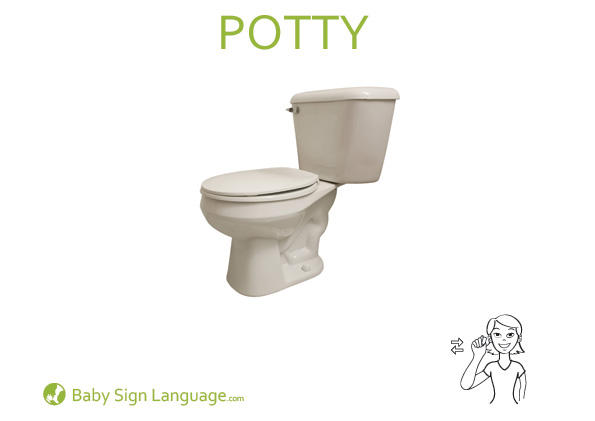
Usage: The potty sign is tremendously useful in potty
training your baby. Using the sign, you can train babies earlier than
if you had to wait until they could speak the word. As you potty train your baby, teach them to make the sign to get you to put them on the potty.
Once signing, your child is making progress
on everything from their fine motor skills, to verbal language development.
They are also able to express their wants and bond that much deeper with their
family. Most words that are signed are eventually spoken and develop as
spontaneous speech.
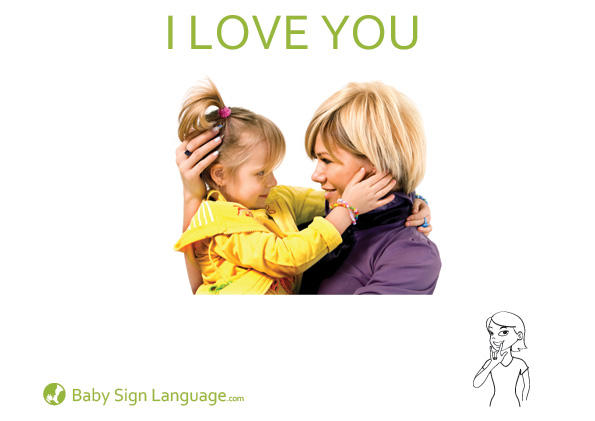
Usage: What could be sweeter than exchanging I love you with your baby.
Every child is different and this is just as true for children with Down syndrome. Your child will develop at his or her own pace and while some parents may look at the race to milestones as a sprint, life is best lived as a marathon.
At Babysignlanguage we are delighted to
support families with special needs. We have a huge collection of resources to
help you teach and learn sign
language for babies and a wonderful set of baby sign language flash
cards
If you would like more information on how you can be a contributor to our 'a helping hand' series here on the Reece's Rainbow blog, please contact lucille@reecesrainbow.org.
Please also grab our 'a helping hand' button for your blog!

Grab This!
Be sure to right click on the box below and then select all.
You can share on facebook, twitter, via email!


